United States of America


Benjamin David ‘Ben’ Leider
United States of America
Benjamin David ‘Ben’ Leider
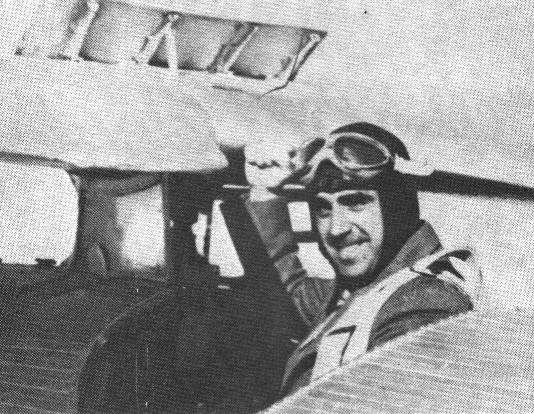
18 October 1901 – 18 February 1937
Ben Leider was born on 18 October 1901 Kishinev, Russia by Jewish parents.
In 1905, his parents fled Russia and immigrated to the United States where his father, Jacob, worked as a common labourer in New York City.
He attended the College of the City of New York in 1920, after which he switched to the School of Journalism at the University of Missouri. During this time he became a fervent Communist.
After graduation with honours he became labour reporter for the New York Post.
An avid pilot, he flew his small Cessna to press assignments and was affectionately known by his colleagues as the "Flying Reporter". Throughout his early career as a journalist, Leider, a member of the American Communist Party, was recognized as an enemy of entrenched plutocracy and a friend of the working class.
In September 1936, he resigned his position with the New York Post and left his wife, Dorothy, to embark for Spain to help defend the Spanish Republican government.
In Spain he used the nom de guerre José Lando.
After overcoming the opposition of Loyalist air force authorities, who argued that Leider did not possess the instincts of a fighter pilot, he came to serve in the 1a Escuadrilla de Chatos under the command of Andrés García La Calle.
By February 1937, capitán Ramón Puparelli Francia was well enough (he had been wounded in combat on 21 October 1936) to be given command of the first two Spanish I-15 escuadrillas. The short-lived grupo was named Grupo de Caza No 16 but both escuadrillas were to operate virtually independently.
Andrés García La Calle was put in command of the 1a Escuadrilla. Initially it comprised three elements. The 1a Patrulla consisted of La Calle, José Calderón, Ramón Castañeda di Campo and Leider, the 2a Patrulla comprised of Jim Allison, Frank Tinker, Harold Dahl and José ‘Chang’ Sellés and the 3a Patrulla was made up of Luis Bercial, Esteban Ortiz, José Riverola Grúas and Gerardo Gil Sánchez (who joined the unit on 10 February).
Capitán Roberto Alonso Santamaría took command of the new second Spanish I-15 escuadrilla, the 2a Escuadrilla, which was established at Los Alcázares and San Javier. From there they moved to El Soto airfield, again on the Madrid front. The new escuadrilla comprised tenientes Rafael Robledano Ruiz, Juan Comas Borrás (posted in late February), Antonio Blanch Latorre, Ricardo Rubio Gómez, Mariano Palacios Menéndez, Ángel Álvarez Pacheco, Justo García Esteban and Hipólito Barbeito Ramos, sargentos Manuel García Gascón, Alfonso Calvo Ortiz, Cándido Palomar Agraz and Rafael Magriña Vidal and Uruguayan teniente Luis Tuya.
On 7 February, the 1a Escuadrilla moved to the old Hispano-Suiza aerodrome in Guadalajara. They began operations at El Jarama, where their activities were outstanding, but their losses heavy; José Calderón, and Leider and Luis Bercial were killed, while Jim Allison and Harold Dahl were shot down but survived.
On 13 February, he claimed one Heinkel over Jarama.
It is reputed that he was wounded and crashed a number of times.
In the early morning on 18 February, two Nationalist Ro.37s (flown by Spanish pilots) took off, followed by three Ju 52/3ms escorted by the Spanish Patrulla Azul and the Italian Fiat Group (totally 25 CR.32 including the Spanish). When they arrived over the front at Jarama, the CR.32s turned so that they were patrolling parallel to the front, while a large formation of Polikarpov fighters waited on the other side. When the Ro.37s and Ju 52/3ms were safe and returning, capitán Joaquín García Morato broke formation and, followed by teniente Julio Salvador Díaz-Benjumea and capitán Narciso Bermúdes de Castro, launched himself into Soviet fighters near Arganda. Disregarding recent orders restricting them from engaging superior numbers of enemy aircraft, Italian pilots tenente Corrado Ricci, tenente Enrico Degli Incerti, capitano Guido Nobili and Fiacchino went to the assistance of their Spanish comrades by leading their respective flights against the large Republican formation of Polikarpov fighters. Finally, the entire group took part in the battle, fighting a reportedly 21 I-15s and 18 I-16s, and the Italians claimed for four ”Curtiss fighters” destroyed and four probables, as well as four Ratas destroyed and one probables. One I-16 and two probable I-15s were claimed by tenente Degli Incerti while sergente maggiore Silvio Costigliolo claimed an I-15 in the Arganda area. Sergente maggiore Guido Presel claimed two I-15s and a probable and sergente maggiore Brunetto di Montegnacco claimed two I-16s. Among the Spaniards, capitán Morato, who returned with damage to his fighter, was credited with an I-15 and another as a probable while teniente Salvador was credited with and I-16 and a second fighter as a probable.
The Italians suffered no losses during this action, and only a solitary pilot was forced to make an emergency landing after he was wounded; the damage to his CR.32 was quickly repaired.
Tenente Degli Incerti described the combat:
“We were on the return leg of an escort mission, and having made sure that our bombers were safe, we had the airfield in sight and prepared to land. It was at that very moment that the three Spanish CR.32 pilots following us, but still flying over enemy territory, decided to take on a large Soviet formation. Although the enemy aircraft were still some distance away, we performed a hasty 180-degree turn at full throttle and joined the fray. All the Italian fighter flights following suit, despite us having orders only to intervene following provocation – our duty was to fight as courageously as possible to the end.Reportedly this battle was fought at 11:00 against at least the I-15s of the Escuadrilla La Calle and Escuadrilla José (the Escuadrilla led by Ivan Kopets) and the I-16s from Escuadrilla Kolesnikov (1a/21). The Republican pilots reported meeting six ”Junkers” and 50 fighters (other sources states 85 (!) Heinkel He 51s) over the front. Immediately the Escuadrilla went into a tight horizontal circle (”Lufbery circle”). The first enemy aircraft fired randomly at the I-15s as they dived past the Escuadrilla’s defensive pattern. Unwillingly to challenge the Republican fighters, the remainder of the Nationalist pilots followed suit, executing a single strafing pass, and then flying lazily below the I-15s in hopes of enticing a few green Republican pilots away of the defensive protection. Leider took the bait and started down after one of the easy-looking targets, only to attract three enemy fighters on his tail. As Frank Tinker peered over his shoulder during the swirling melee of aircraft, he saw Leider’s I-15 to shudder as the CR.32s flashed past. Tinker’s heart sank as he noticed Leider veer toward friendly territory in a shallow dive. Twice, Leider tried to land his fighter in a small field before slamming into the side of a hill, killing him.
Once we had engaged the enemy, both sides formed a long line of aircraft, and this was turning, banking and circling. The fighters alternated in this single file trail, with two or three “Reds” for every Nationalist. It was as if this formation had been planned. Many tracer rounds flashed through the sky from the aircraft, turning the dogfight into an infernal ballet. Smoke trails of death suddenly appeared, and the long line broke into smaller rows.
The battle threw up numerous small skirmishes that ended inconclusively. Despite being outnumbered, we legionnaires stood together, compact, protecting each other. All of a sudden in the centre of the melee an aircraft caught fire and a parachute opened. The former fell away and crashed to the ground, while the latter floated away to safety. A “Red” had been shot down. Four of his comrades, fearing that we'd shoot at the pilot, circled him for his protection. Two CR.32s engaged them. This turn of events split the battle into two groups, within which fierce fighting continued.
The “Curtiss fighter” section then broke off their attack, unable to defeat our concentrated gunfire. They tried to escape, but this move failed and two of the stubby fighters fell in flames.
Thirty minutes into the battle, thousands of bullets had crossed the sky over Villaconejos. By now the revolving aircraft and chatter of the guns had diminished. The fighting faded slowly away, and within a short time we remained as the sole masters of the sky over the Jarama front.”
At the time of his death, Leider was credited with 1 biplane victory.
He was buried in the municipal cemetery at Colmenar de Oreja, outside of Madrid. His grave became a shrine to Government pilots taking off on missions from nearby airfields, who when flying overhead would salute it.
An orphanage in Spain was named after him.
In mid July 1938 his body was exhumed and sent back to the United States. He was reburied on 21 August 1938 at Mount Hebron Jewish Cemetery, Flushing, New York.
Claims:
Biplane victories: 1 destroyed.
Sources:
Kill no.
Date
Time
Number
Type
Result
Plane type
Serial no.
Locality
Unit
1937
1
13/02/37
1
Heinkel
Destroyed
I-15
Jarama area
La Calle Escuadrilla
TOTAL: 1 destroyed.
Airmen without a portfolio: U.S. mercenaries in civil war Spain - John Carver Edwards, 2003 Global Book Publisher, ISBN 1-59457-175-9
Air War over Spain - Jesus Salas Larrazabal, 1974 Ian Allan Ltd, Shepperton, Surrey, ISBN 0-7110-0521-4
Fiat CR.32 Aces of the Spanish Civil War - Alfredo Logoluso, 2010 Osprey Publishing, Oxford, ISBN 978-1-84603-983-6
Flyers of Fortune
Legionaire Ace – Julius R. Gaal, 1972, Aero Album Volume 5 Number 1 Spring 1972
Några leva än - F. G. Tinker, 1939 T. V. Scheutz Bokförlag AB, Stockholm
Polikarpov Fighters in action Pt. 1 - Hans-Heiri Stapfer, 1995 Squadron/Signal Publications, Carrollton, ISBN 0-89747-343-4
Spanish Republican Aces – Rafael A. Permuy López, 2012 Osprey Publishing, Oxford, ISBN 978-1-84908-668-4
Stars & Bars - Frank Olynyk, 1995 Grub Street, London, ISBN 1-898697-17-5
The Polikarpov I-15 Chato in the Spanish Civil War 1936-1939
Wings Over Spain - Emiliani Ghergo, 1997 Giorgio Apostolo Editore, Milano
Additional information kindly provided by Simon Buckley, Eugenio Costigliolo and Mihail Zhirohov.


